Best Coffee Beans in Australia: How to Choose the Right Beans
Walk down any coffee aisle or scroll any online roaster and the choices stack up fast: light or dark, single origin or blend, Arabica or Robusta, whole bean or ground, roasted last week or sometime last season. It is easy to buy on price or packaging and end up with a bag that suits neither your taste nor your machine. Four things shape almost every cup: how fresh the beans are, how they were roasted, where they were grown and how you brew them. This guide walks through each one in plain terms, with an Australian lens, so you can choose the right coffee beans for your kitchen, your machine and your palate.

- The short answer
- What makes the best coffee beans?
- How to choose the best coffee beans in Australia
- Best coffee beans for espresso
- Arabica vs Robusta
- Whole bean vs ground coffee
- How fresh should coffee beans be?
- How to store coffee beans
- Best beans for different tastes
- Best beans for different coffee machines
- Coffee beans vs capsules
- How to buy coffee beans online in Australia
- Why freshly roasted beans make a difference
- Dipacci coffee beans by use case
- Common coffee bean buying mistakes
- FAQs
The Short Answer: What Are the Best Coffee Beans in Australia?
The short answer: The best coffee beans in Australia are the ones that are freshly roasted, suit your preferred roast level and flavour, and match how you brew. For espresso, that usually means a fresh blend or single origin with a roast date, a good balance of sweetness and body, and a grind you can dial in. No single brand is best for everyone.
That answer sounds modest, but it is the honest one. A bag of premium coffee beans that is six months old will taste flat next to a freshly roasted blend from a roaster you trust. A beautifully roasted light roast will disappoint someone who wants a bold flat white. The rest of this guide gives you a simple framework for matching beans to your taste, your brew method and your budget.
What Makes the Best Coffee Beans?
Quality in coffee is the sum of many small decisions, from the farm to your kitchen bench. These are the factors that matter most, and the ones worth checking before you buy.
Freshness
Aroma and sweetness fade as beans age after roasting. A roast date tells you more than a best-before date.
Green bean quality
Roasting cannot fix poor raw coffee. Clean, carefully graded green beans set the ceiling for the cup.
Origin
Altitude, climate and soil shape acidity, sweetness and body before the beans are ever roasted.
Roast quality
Even, controlled roasting builds sweetness without scorching. The roast level then shifts the flavour balance.
Bean variety
Arabica and Robusta differ in flavour, caffeine and crema, so the species on the label matters.
Processing
Washed, natural and honey processing change how clean, fruity or heavy a coffee tastes.
Storage
Air, light, heat and moisture speed up staling, especially after the bag has been opened.
Brewing method
Grind size, dose, water temperature and time decide how much flavour reaches your cup.
Notice what is missing from that list: price on its own, and words like "strong" or "intense" on the front of the bag. Neither tells you much about flavour or quality. A fair price often reflects careful sourcing and roasting, but an expensive bag is not automatically fresh, and a cheap one is not automatically bad. Look at the information the roaster gives you instead.
At our Roselands roastery in Sydney, green beans are cupped before roasting, cleaned through a triple green bean cleaning process, roasted on an automated IMF roaster and sealed fresh, with every bag roasted to order. We cover the full process in our guide to the coffee roasting process. That experience shapes how we think about what makes coffee beans good, and the advice below reflects it.
How to Choose the Best Coffee Beans in Australia
Work through these five steps in order. Each one narrows the field until the right bag is obvious.
1. Choose beans based on your brewing method
Your brew method sets the grind, the contact time and the flavours that will stand out. As a starting point:
- Espresso machine: beans roasted with espresso in mind, ground fine, and a roast that gives sweetness and body under pressure.
- Automatic bean-to-cup machine: a fresh, medium roast is usually the safest start, as very oily beans can build up residue in some built-in grinders.
- Moka pot: a medium to medium-dark roast ground a little coarser than espresso, for a rich, concentrated cup.
- French press (plunger): a coarse grind and a roast with good body, as the full immersion highlights richness and texture.
- Pour-over: a medium grind, and often a lighter roast, because the paper filter highlights clarity, sweetness and aroma.
- AeroPress: very flexible, so most roasts work. Light to medium roasts are popular for a clean, sweet cup.
2. Choose your preferred roast level
Roast level is the biggest lever on flavour. Lighter roasts keep more of the bean's origin character, while darker roasts trade some of that for roasty, chocolatey depth. Roast names are not standardised, so one roaster's medium can look like another's medium-dark. Use the table as a guide and read the tasting notes.
| Roast | Typical flavour | Acidity | Body | Best suited to |
|---|---|---|---|---|
| Light | Floral, citrus, berry, tea-like sweetness | Higher | Lighter to medium | Pour-over, filter, bright espresso, black coffee |
| Medium | Caramel, milk chocolate, balanced sweetness | Moderate | Medium | All-rounders, espresso, milk drinks |
| Medium-dark | Cocoa, toasted nuts, deeper sweetness | Lower to moderate | Fuller | Espresso, cappuccinos, moka pot |
| Dark | Dark chocolate, smoky, roasty | Low | Heavy | Bold espresso, strong milk coffees, plunger |
None of these is universally better. They are different flavours, and the right one is the one you enjoy drinking every morning.
3. Check the roast date
Freshly roasted coffee beans release carbon dioxide for days after roasting, a process called degassing. Beans that are too fresh can produce uneven espresso with lots of gas and a sharp, unsettled flavour, so many baristas let espresso beans rest briefly before using them. After that, flavour peaks for a window of weeks and then slowly fades into stale, flat and papery coffee.
That is why a roast date is more useful than an expiry date. A best-before date tells you how long the sealed bag is considered safe and shelf-stable, not when the coffee tasted its best. The ideal resting time varies by bean, roast level and brew method, so treat any rule of thumb as a starting point rather than a law. If a bag shows no roast date, ask the roaster. We roast to order, so your beans are freshly roasted before dispatch.
4. Consider the coffee's origin
Where coffee grows influences acidity, sweetness, body and the flavour notes you taste. These are tendencies, not guarantees, because processing and roasting also play a big part.
| Origin | Typical character |
|---|---|
| Brazil | Nutty and chocolatey, low acidity, heavy body. A common base for espresso blends. |
| Colombia | Balanced and sweet, with caramel and soft fruit. Smooth and approachable. |
| Ethiopia | Floral, citrus and berry notes with a tea-like lift. Often the aromatic top note in a blend. |
| Kenya | Bright, juicy and berry-like acidity with real intensity. |
| Central America | Clean and sweet, often brown sugar, cocoa and nut. Guatemala, Costa Rica, Honduras and Panama are well-known examples. |
Our own range draws on regions including Brazil, Colombia, Ethiopia, Honduras, Costa Rica, Kenya and Papua New Guinea across the signature blends, and the single origins feature Panama, Guatemala and Colombia Supremo. The product pages list the origins in each blend, so you can see exactly what you are buying.
5. Decide between single origin and blend
| Feature | Single origin | Blend |
|---|---|---|
| Flavour | Distinctive and specific to one place | Rounded and designed by the roaster |
| Consistency | Can vary by season and harvest | Built to taste the same bag after bag |
| Complexity | Can be vivid, sometimes polarising | Layered, with strengths balanced across origins |
| Espresso suitability | Works well, but may be sharper or less forgiving | Traditionally designed for espresso and milk |
| Who may prefer it | Curious drinkers who like to explore flavour | People who want a reliable everyday cup |
If you want an easy, dependable daily coffee, start with a blend. If you enjoy tasting what makes one farm or region different, add a single origin alongside it. Our guide to the best coffee blends in Australia goes deeper on choosing between them.
Best Coffee Beans for Espresso
Espresso is brewed fast, under pressure, with a lot of coffee in a small volume of water. That makes it unusually revealing: it exaggerates sweetness, acidity and bitterness all at once, so the beans you choose matter more than with most other methods. When shopping for espresso coffee beans or looking for the best beans for a coffee machine, these are the qualities to think about.
- Body: espresso needs enough body to feel round and syrupy, particularly if you add milk.
- Crema: the golden layer on top comes from dissolved gases and oils. Fresh beans produce more of it, and some Robusta can add to it.
- Balance: sweetness should offset acidity and bitterness, so no single note dominates.
- Acidity: some brightness adds life, but too much can taste sour, especially in a short shot.
- Extraction: the aim is to pull out sweetness and flavour without over-extracting bitterness.
- Roast profile: espresso roasts are developed to dissolve well and taste balanced under pressure.
- Grind size: usually fine, and adjusted in small steps as the beans age or the weather changes.
- Dose: a consistent, weighed dose matters more than most people expect.
- Brewing temperature: most machines run somewhere around 90 to 96°C. As a rule of thumb, lighter roasts often taste better a little hotter and darker roasts a little cooler.
Does espresso need dark-roasted beans? No. Dark roasting became the espresso tradition because it produces a heavy body and bitter-sweet flavour that cuts through milk, but it is a style, not a rule. Medium and medium-dark roasts can give sweet, balanced shots with more nuance, and light roasts can make bright, fruity espresso if you are comfortable adjusting your recipe. Choose the flavour you want first.
A useful starting recipe is the one we publish on our blend pages: 21g of coffee in, around 40ml out, in roughly 30 seconds, then adjust to taste. If the shot tastes sour and thin, grind finer or extend the yield. If it tastes bitter and harsh, grind coarser or shorten it.
Arabica vs Robusta: Which Coffee Bean Is Better?
| Feature | Arabica | Robusta |
|---|---|---|
| Flavour | Sweeter, more aromatic, more complex | Stronger, earthier, more bitter |
| Acidity | Higher, can be fruity or floral | Lower |
| Caffeine | Roughly 1.2 to 1.5% | Roughly 2.2 to 2.7% |
| Body and crema | Moderate body, lighter crema | Heavier body, thick crema |
| Typical use | Specialty coffee, single origins, quality blends | Instant coffee, some traditional espresso blends |
Which is better? For flavour on its own, most coffee professionals prefer Arabica, which is why specialty coffee is overwhelmingly Arabica. Robusta is not simply bad. Good-quality Robusta adds body, crema and a caffeine kick, and some traditional Italian-style espresso blends include a small share for exactly that reason. The quality gap shows up when low-grade Robusta is used as a cheap filler. Check the label, and if the species is not stated, ask.
We cover the topic in more detail in Arabica vs Robusta coffee, including caffeine, growing conditions and where each ends up in your cup.
Whole Bean vs Ground Coffee
Whole beans protect their flavour because only a small surface is exposed to air. Once coffee is ground, that surface area explodes, aroma escapes quickly and oxidation speeds up. Ground coffee is convenient and needs no equipment, but it stales faster and gives you no control over grind size.
For espresso, grind size is the main adjustment you have, so whole beans plus a decent grinder is by far the better combination. A pre-ground bag has to be a compromise between machines.
Our recommendation: if you own a coffee grinder, buy whole beans and grind just before each brew. If you do not, buy coffee ground for your specific method and use it quickly. Our blends are available whole bean or ground for espresso, plunger or filter (AeroPress and V60), so you can order the grind that fits your setup.
How Fresh Should Coffee Beans Be?
After roasting, coffee goes through a predictable sequence. It degasses, reaches a window of peak flavour, and then gradually stales as oxygen breaks down the aromatic compounds and oils. Staling is not a switch. It is a slow fade, and the speed depends on how the beans are treated.
How long do coffee beans stay fresh? Whole beans commonly taste their best within the first few weeks after roasting and can remain pleasant for a couple of months if stored well. There is no single rigid number, because freshness depends on:
- Packaging: sealed, one-way valve bags protect beans better than open containers.
- Storage: airtight, cool and dark beats a clear jar on a sunny bench.
- Roast level: darker roasts have more oils on the surface and can go off sooner once exposed.
- Exposure to air: every time you open the bag, oxygen gets in.
- Heat, moisture and light: all three accelerate staling.
We go further in our guide on how long coffee beans stay fresh, including signs your coffee has gone stale.
How to Store Coffee Beans
Good storage is cheap insurance for coffee you have already paid for. In an Australian home, where summer kitchens run hot and coastal humidity is a factor, these habits make the biggest difference:
- Use an airtight container or keep the beans in their sealed bag, pressed flat and clipped.
- Keep it cool: a pantry or cupboard away from the stove, oven, kettle and dishwasher.
- Keep it dry: moisture dulls flavour, so avoid damp spots and wet scoops.
- Avoid direct sunlight: opaque containers are better than clear glass on a sunny bench.
- Avoid repeatedly opening the container: keep a week or two of beans in a small daily jar and leave the rest sealed.
Should you refrigerate or freeze coffee beans? For opened beans you are using within a few weeks, the fridge is usually a poor choice. It is humid, it holds food odours, and taking a cold container out and opening it lets condensation form on the beans. Freezing can work for long-term storage if you divide beans into small airtight portions, freeze them quickly, and thaw a sealed portion fully before opening. Never refreeze. For most households, a cool cupboard and a sensible amount of beans at a time is simpler and just as good. Browse our coffee accessories for tools that make day-to-day brewing easier.
Best Coffee Beans for Different Taste Preferences
Start with what you like in a cup, then work backwards to the beans. The third column shows where our own range fits, based on the tasting notes published on each product page.
| If you like... | Look for... | Worth trying from Dipacci |
|---|---|---|
| Chocolate and nutty flavours | Medium to dark roasts, Brazil and Central American origins | Single Origin Guatemala or Single Origin Panama |
| Strong and bold coffee | Dark or medium-dark roast, full body, a higher dose | After Dark |
| Fruity coffee | Light roasts, Ethiopian and Kenyan origins | By The Bay |
| Smooth coffee | Medium roast, Colombian or Brazilian beans, low bitterness | Elements or Single Origin Colombia Supremo |
| Low-acidity coffee | Darker roasts and low-acidity origins such as Brazil | After Dark |
| Bright and vibrant coffee | Light roast, washed processing, East African and Ethiopian beans | By The Bay or Sydney Road |
| Full-bodied espresso | Medium-dark to dark roast, heavier-bodied origins | After Dark or Elements |
| Balanced coffee | Medium roast blends with sweetness and moderate acidity | Elements or Sydney Road |
Best Coffee Beans for Different Coffee Machines
The machine alone does not decide the best bean. Your grinder, your technique and your own taste matter just as much. Use this table as a starting point and adjust from there.
| Equipment | Roast and style to try | Grind | Notes |
|---|---|---|---|
| Manual espresso machine | Medium to medium-dark blend, or a roast you enjoy | Fine, adjusted often | Gives the most control, and the most to learn |
| Automatic bean-to-cup machine | Fresh medium roast | Set by the machine | Check the manual before using very oily beans |
| Commercial espresso machine | A consistent blend suited to milk drinks and high volume | Fine, dialled in daily | Consistency matters as much as flavour |
| Moka pot | Medium to medium-dark | Medium-fine | Avoid a grind as fine as espresso |
| French press | Medium to dark for body, or light for a fruity cup | Coarse | Steep around 4 minutes, then press |
| Pour-over | Light to medium, often single origin | Medium | Highlights clarity and sweetness |
| AeroPress | Light to medium | Medium-fine to medium | Very flexible, so experiment |
Coffee Beans vs Coffee Capsules
| Factor | Coffee beans | Capsules |
|---|---|---|
| Freshness | Excellent when freshly roasted and ground to order | Sealed at packing, but not freshly ground |
| Convenience | Needs a grinder and a little technique | Very fast and simple |
| Cost per cup | Usually lower per cup | Usually higher per cup |
| Flavour control | High: grind, dose, ratio and roast are all yours to choose | Limited to the capsule and machine settings |
| Variety | Wide range of roasters, origins and roast levels | Limited to what your system supports |
| Waste | A bag and used grounds | A capsule per cup, with recycling depending on brand and local options |
| Equipment | Espresso machine or other brewer, plus a grinder | A compatible capsule machine |
Capsules win on speed. Beans win on freshness, flexibility and cost per cup once you own the equipment. Either can be a good choice, depending on how much effort you want to put in each morning.
How to Buy Coffee Beans Online in Australia
Buying coffee beans online is convenient, but you cannot smell the bag or check the date on the shelf. Before you order, look for:
- Roast date or roast-to-order: the single most useful piece of freshness information.
- Origin information: countries or regions, ideally for each component of a blend.
- Bean type: Arabica, Robusta or a blend of both.
- Roast level and tasting notes: so you know what to expect.
- Brewing recommendations and grind options: a good sign the roaster understands how you will use the coffee.
- Packaging: sealed, resealable bags that protect against air and light.
- Shipping and storage: a clear delivery policy, and advice on storing the beans once they arrive.
- An Australian roaster: shorter distances mean fresher beans, and support is local.
You can explore our full range of coffee beans online. Every bag is roasted to order at our Roselands roastery in Sydney, shipped Australia-wide, and available whole bean or ground. If you are unsure where to start, the 4 x 250g sample pack lets you taste all four signature blends. You can also visit our stores or get in touch with questions.
Why Freshly Roasted Coffee Beans Can Make a Difference
Every cup of coffee follows the same chain, and each link affects the next:
- Green coffee: raw, dense and grassy. Its quality and moisture set the starting point.
- Roasting: heat triggers the Maillard reaction and caramelisation, breaking down sugars and acids and creating hundreds of flavour and aroma compounds. The beans expand, darken and lose moisture.
- Degassing: trapped carbon dioxide escapes over days, which calms the beans for brewing.
- Grinding: breaking the bean releases aroma and exposes flavour to water, and also to oxygen.
- Extraction: hot water dissolves sugars, acids and bitter compounds in a particular order, which is why grind and time matter.
- The cup: what is left is a direct reflection of every earlier step.
Roasting is where a roaster's craft shows. At our Roselands roastery we use an automated IMF roaster with computerised roasting profiles, so each batch is repeatable, and we run green beans through a triple cleaning process before they reach the roaster. Our founder has spent more than 15 years sourcing green beans and building roast profiles, and that hands-on experience is behind how we cup, blend and roast. You can read more in our story.
Dipacci Coffee Beans by Use Case
If you would like a shortcut, here is how our range lines up with the use cases above. Everything below comes from the tasting notes and origins published on each product page.
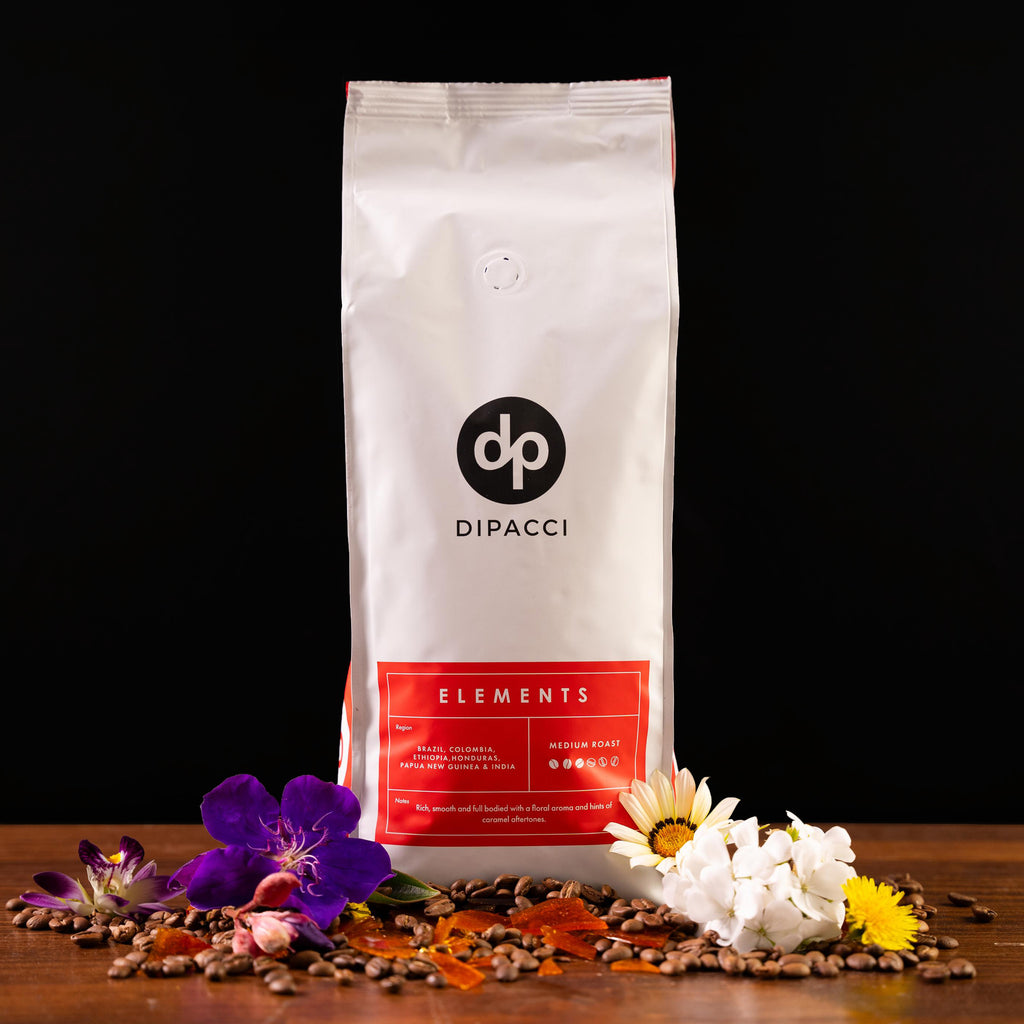
Medium roast. Rich, smooth and full-bodied with a floral aroma and hints of caramel. Origins include Brazil, Colombia, Ethiopia, Honduras, Papua New Guinea and India.
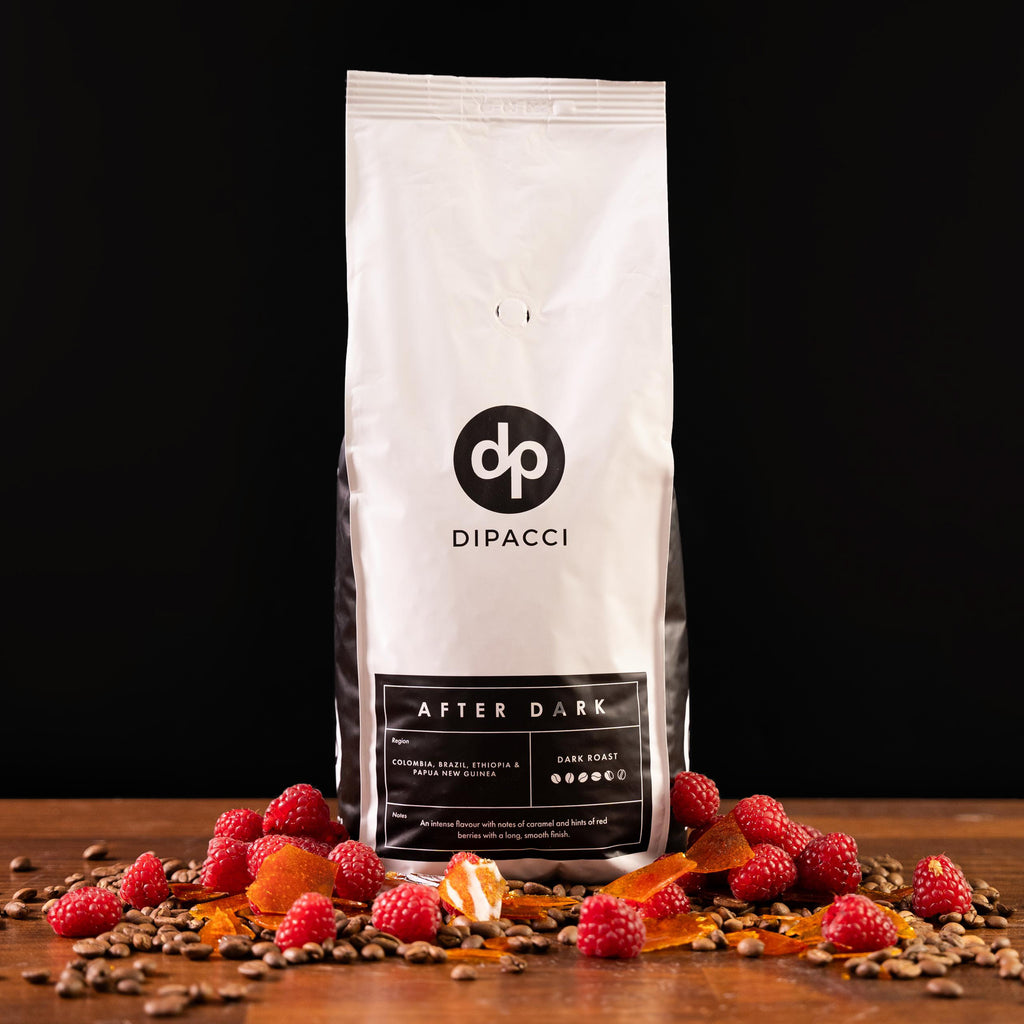
Dark roast. Intense and full-bodied, with deep caramel sweetness and subtle red-berry fruitiness. Origins include Colombia, Brazil, Ethiopia and Papua New Guinea.
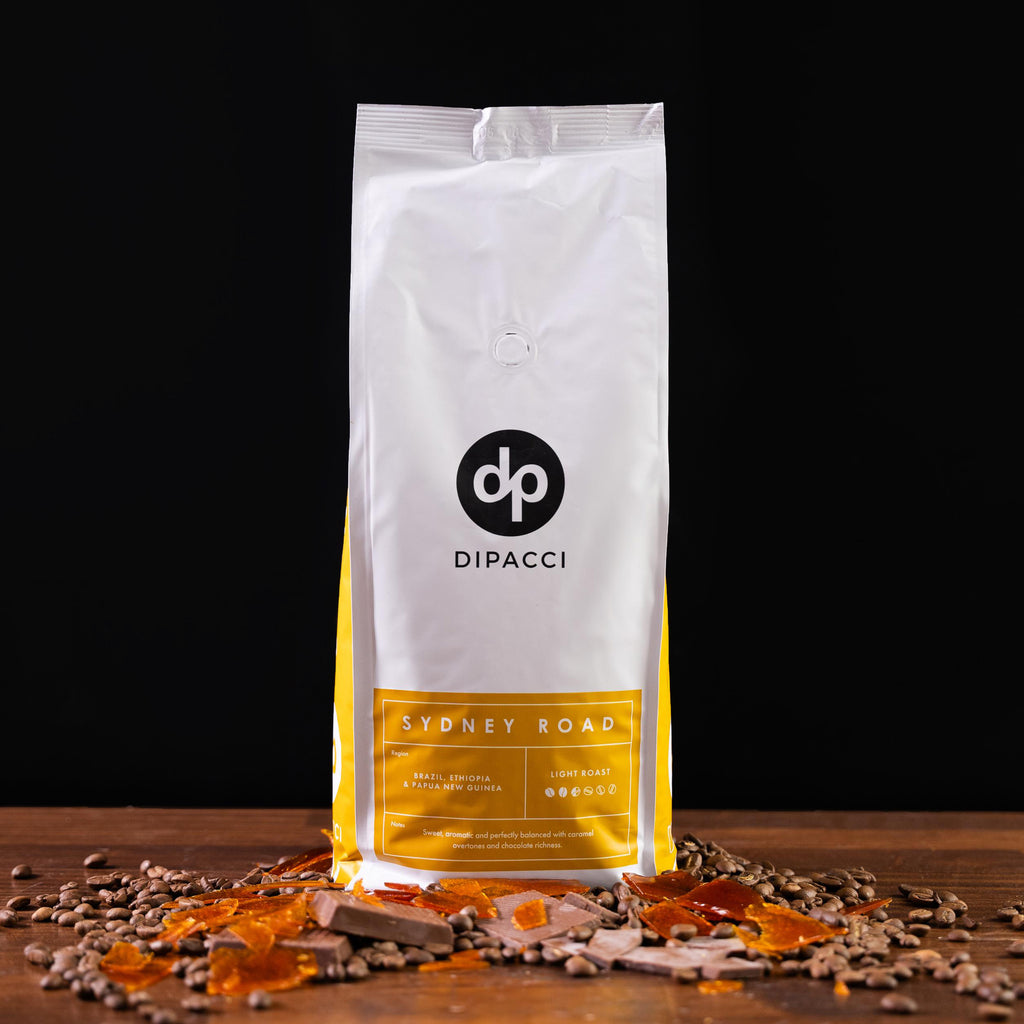
Light roast with caramel overtones, chocolate richness and a floral aroma. Works as espresso, filter or plunger. Origins: Brazil, Ethiopia and Papua New Guinea.
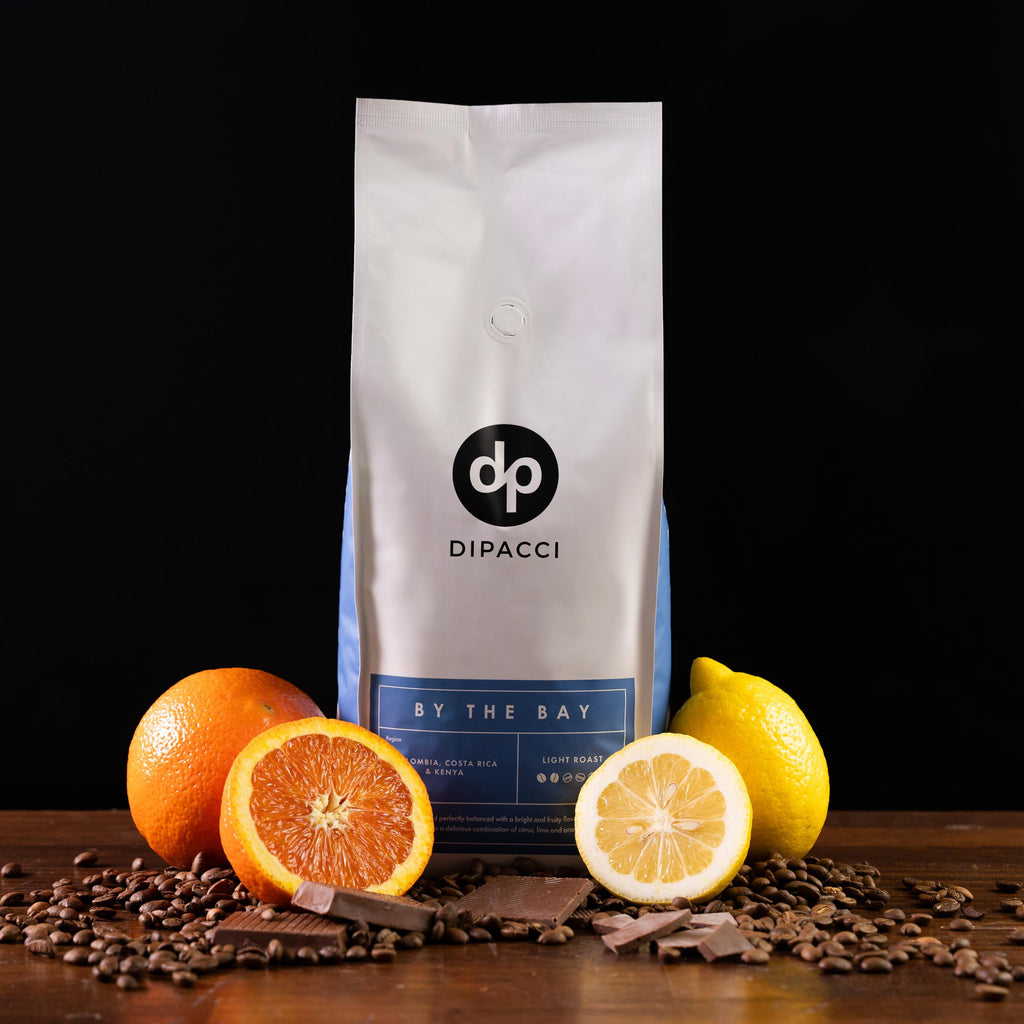
Light roast with citrus and bergamot, berry-like acidity and a nutty sweetness. Origins: Colombia, Costa Rica and Kenya.

Full-bodied with brown sugar, dark chocolate and a clean walnut finish, from the Guatemalan highlands.

All four signature blends in 250g bags, with tasting cards, so you can find your favourite.
For automatic bean-to-cup machines, a medium roast such as Elements is a sensible place to begin, but always check your machine's guidance on bean oiliness. For black coffee, the lighter blends and single origins show their character best. We also offer Single Origin Panama and Single Origin Colombia Supremo, and a larger 4 x 1kg sample pack if you already go through coffee quickly.
Common Coffee Bean Buying Mistakes
- Buying based only on price. The cheapest bag is rarely the best value if the beans are stale or poorly roasted. Compare cost per cup against quality.
- Ignoring the roast date. A roast date tells you far more about flavour than a best-before date.
- Choosing the wrong roast for your taste. If you dislike bitterness, a very dark roast is unlikely to please. If you want boldness, a light roast may feel thin.
- Using stale beans. Coffee that has sat open for months will taste flat however good it once was.
- Buying pre-ground coffee without considering freshness. Ground coffee stales quickly, so only buy what you will use soon.
- Ignoring the brewing method. A grind and roast that suit a plunger rarely suit an espresso machine.
- Storing beans incorrectly. Heat, light, air and moisture undo good roasting.
- Choosing beans because they are labelled "strong". Strong is a marketing word. It can mean dark, bitter or high in Robusta, and it says little about quality.
- Assuming dark roast means more caffeine. Roast level has only a small effect on caffeine. Species, dose and brew method matter more.
- Buying without checking origin or roast information. If a roaster will not tell you where the beans are from or how they were roasted, be cautious.
Ready to Find Your Coffee Beans?
Browse our freshly roasted blends and single origins, choose whole bean or ground, or start with a sample pack to find the roast that suits you.
Shop Coffee Beans